
Addressing Incomplete Integrations
Delivering M&A value through a reset
Acquisitions rarely fail. Integrations do, and most of them can still be fixed

Merging, or integrating, acquiring and acquired businesses together involves hundreds of tasks or projects. If all activity has stopped and the value that the Acquisition Deal Team envisioned has not been delivered, it should be considered a Halted Integration. If progress has slowed, or is on pause with the intention of continuing, it could be considered a Stalled Integration.
A stalled integration isn't a failed acquisition. It's an unfinished one
A halted integration isn't over. It's paused, and can be restarted
The Dual Pressures of Acquisition Integration and Business As Usual
Integrating, or merging businesses together is usually a huge undertaking. Even the smallest of integrations can involve hundreds of tasks or projects to be completed. It can be very difficult to complete migrations or implementations, with the dual pressures of integrating while sustaining Business As Usual (BAU).
Often the burden can be too much, and progress gets unacceptably slowed or stalled.
Stalling or stalled integrations have not failed: there is an intention to complete them. However, the inertia needed to complete it will be greater than what was needed at the time of the acquisition.

Experiencing an incomplete integration unfortunately means that you are with most mergers and acquisitions. The vast majority of acquisition integrations do not deliver on their initial objectives. Since the 1970s M&A integration success rate has been consistently measured, and it continues to be no better than 30% *.
Addressing Incomplete Integrations

Assess, review, and uncover the root causes
Before starting, we secure leadership buy-in to the (sometimes difficult) review of current and past integrations. The assessment will include interviews, informal discussions, discovery of related tools, decision making processes, priorities, messaging, and how your teams work together across locations.

Plan the transformation
After analysis and approval, we plan the measurable objectives and how the resources will be used to deliver them. This identifies workstreams, high-level projects, detailed projects and schedules. The transformation will impact the people, technologies, operations, and business cultures of the business.

Building Repeatable Capability
Oftentimes incomplete integrations are associated with institutionalized cultures and processes that were appropriate before M&A began. To reboot and deliver integrations could involve Creating Change within your business. Upon completion, we help integration as a standing capability with playbooks, templates, and a refreshed approach to value delivery.
Who is this for?

PE sponsors and platform companies not achieving consistent results in value delivery

Acquirers who have found it hard to rectify incomplete integrations
Addressing Incomplete Integrations
There is no magic bullet that can ensure integrations are successful. Nor is there a single common cause why integrations have difficulties.
Our process to address incomplete M&A integrations is based upon our experience in M&A, Change Management, Business Operations and Project/Program Management. The result is an unambiguous process that provides order and direction to restart and/or complete integrations.
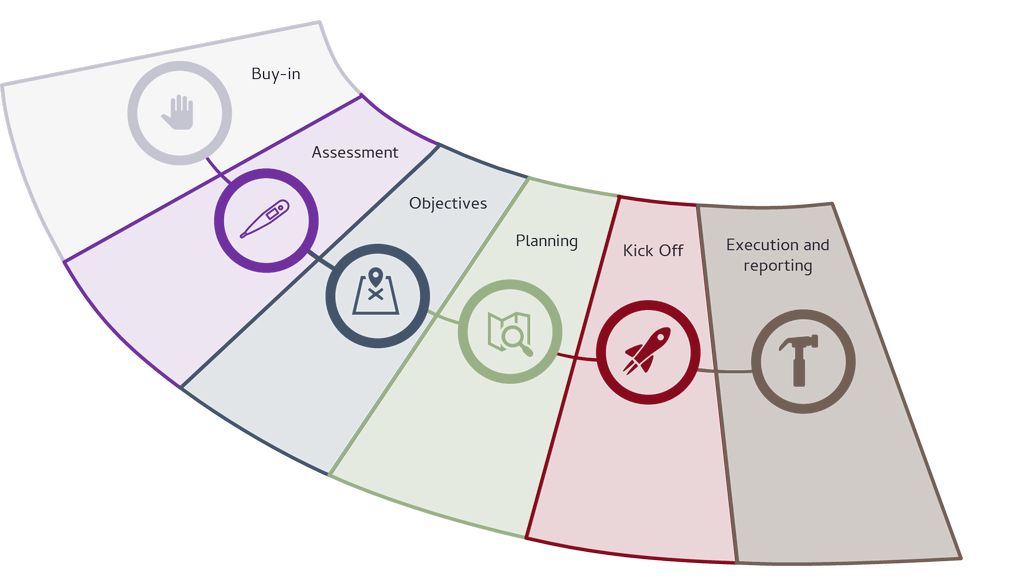
Fixed Incomplete Integrations Framework
How we help acquirers reset, review and re-engage the incomplete integration of an acquired business.

1. Secure leadership buy-in to a difficult process

2. Investigate the existing status, discover roadblocks, and determine what the issues were

3. Create integration objectives

4. Formulate how to relaunch and deliver the integration of the businesses

5. Kick off Create the list of projects and activities needed to integrate the two businesses together

6. Execute the integration plan and merge the businesses
FAQs
How long will it take to fix an integration?
- Fixing a troubled integration will take longer than if it went smoothly from the start. It can take 30 to 70% more time than the initial schedule, in addition to the time already spent to get it to where it currently is.
- For example, an integration of 100 employees was scheduled to take 5 months to complete but stalled after 3 months. The fixed integration could take an additional 4 to 9 months to complete
Is there a guarantee of success?
- No, there isn’t. For a variety of reasons, based upon amount of operational and emotional change required. It may be there is too much reluctance or insufficient resources commitment to the reboot
- The issues may never become clear, and the roadblocks may never be overcome, for personal or political reasons.
Grade Your Acquisition Integration Completeness
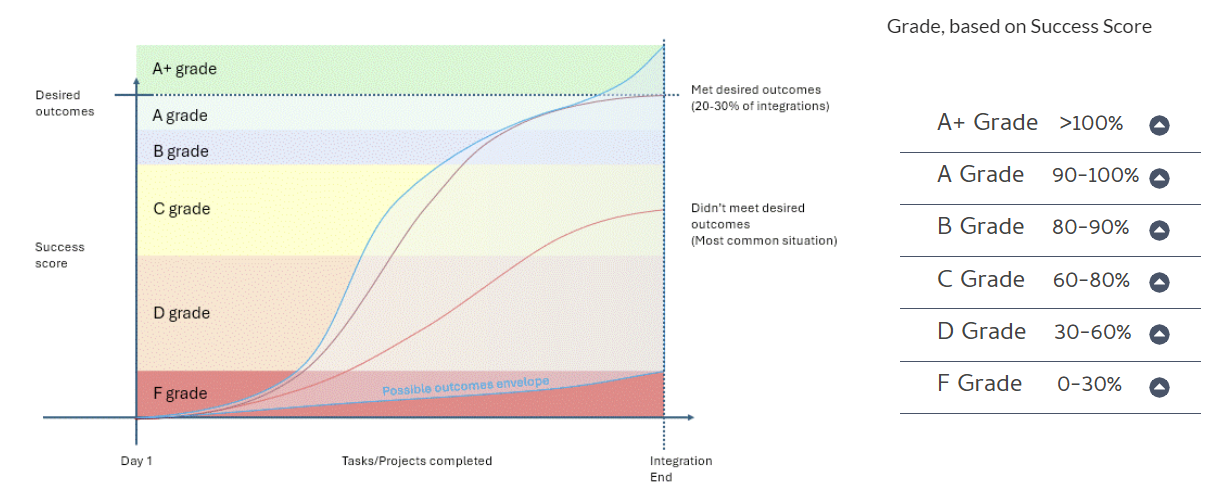
Invest 4 minutes to get an approximate Success Score on how complete your M&A integration is. Learn more, here. or click on the Survey button,